Why Force It?
Very Well, I Contradict Myself

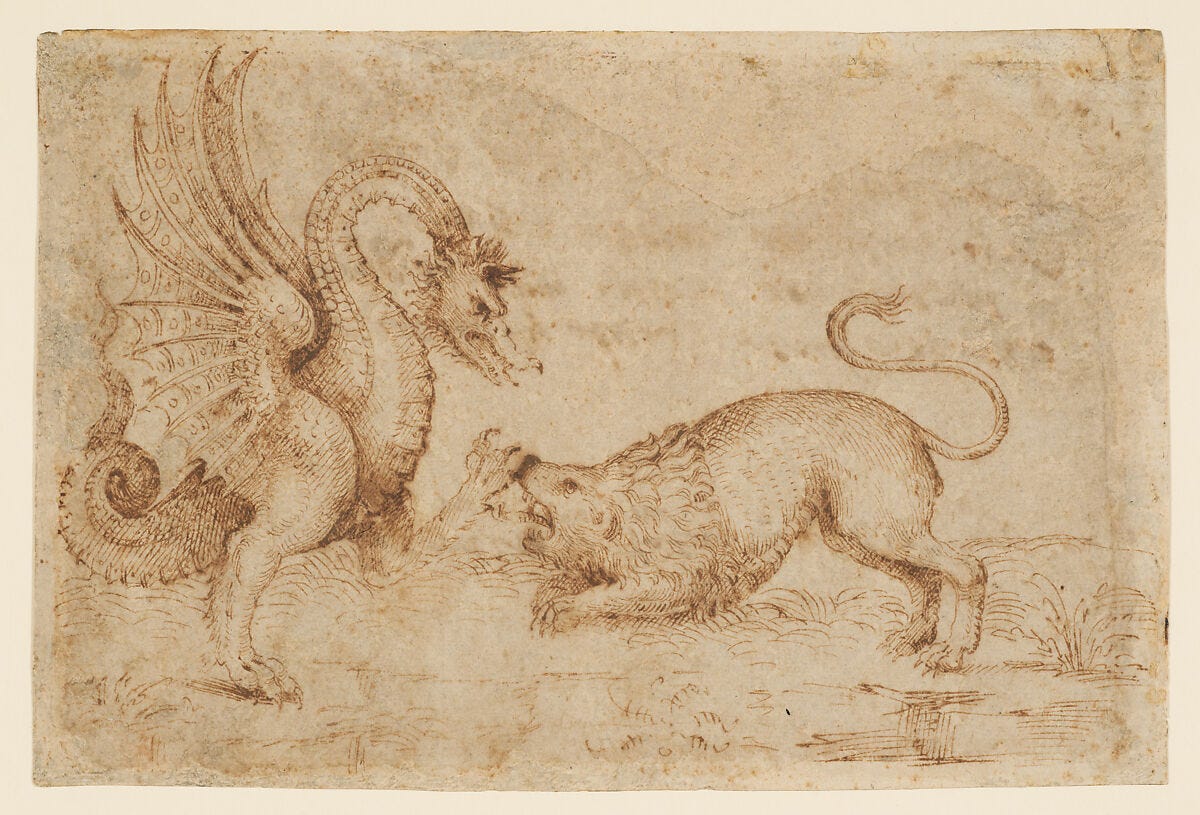
In my last entry, I discussed what motivates us to write, with an emphasis on how we think the process should feel. Reading back, I generally like that entry. (I’ll probably be happy with any entry that features Medieval lions — spoiler for what’s ahead.) But the truth is that I was trying to exorcise some anxieties I’ve been having around my own process. So this entry is a kind of counterargument. What motivates me to think about what motivates me to write.
Clearing the Record
There’s a potential misreading of that last entry: that writing is interchangeable with any other form of dopamine-reinforcing behavior. I was trying to sort through a melange of motivations and experiences to pick out threads that help and hinder my impulse to write. I intended this as a demystification of the process and a way of giving yourself grace: you can consider yourself an artist even if you don’t feel like an artist. My conclusion wasn’t intended to be that writing = video games, but to understand where there are overlaps that make you feel similarly.
The social impulse – the sort of thing you get when listening to a podcast or watching a YouTube video or talking to a friend – is a factor in how and whether I write. (Moreso if I’m in more of a confessional mode or journaling, certainly.) If I’m getting that hit from a Twitch stream, say, I’m less likely to seek it out when writing. But that doesn’t mean they’re the same.
I Touch Myself
Depending on my mood (e.g., last week vs. this), I’ll gravitate toward one or another explanation of the main value of writing. Right now, my explanation is that, to try to describe the world, I must engage with it and process it. I can’t be checked out or distracted, exhausted and trying to just ignore my world until tomorrow. Even without writing, even in the abstract, that is the life I want to live.
I quoted Stephen King’s conclusion to On Writing, which I’ll do again here because I appreciate the sentiment:
In the end, it’s about enriching the lives of those who will read your work, and enriching your own life, as well. [...] The rest of it – and perhaps the best of it – is a permission slip: you can, you should, and if you’re brave enough to start, you will. Writing is magic, as much the water of life as any other creative art. [2000, p. 270]
If I write, it’s because my goal is to live in the mindset that is required in order to write: empathetic, alert, and imaginatively. There’s not much in the world that requires that, and seemingly very little in our culture that encourages it. Here I refer again to consuming content as a firehouse–jumping from YouTube to binging TV to music to games to social media to clickbait. I can fill all of my free time this way. Consuming content generates a kind of joyless attentiveness, a comfortable dissociation. My connection to the world dies.
Here I think again of Rilke, as hard on him as I was in that last entry. Much as the language continues to infuriate me, the message of “you write because, if you did not, you would die” is applicable here. To write – poetry or fiction or even exploratory journaling – demands at least a nugget of being alive in the way that I want to be. It is engaging and rewarding in the way that learning is. It validates and connects my existence. Without it, some (strictly metaphorical, goddamnit) part of me dies.
I hadn’t wanted to write this entry before because I don’t want it to look like so many “the reason you don’t feel creative is you” takes. Videos that talk about how videos are draining us of inspiration. Substacks that talk about how substacks keep you from writing. I don’t, fundamentally, want to condemn enjoyable content. These things are (mostly) not evil.
Least of all Vampire Survivors, my beloved, who can do no wrong. I didn’t mean those terrible things I said. I’ll always love you, baby.
So What Drives Me?
Reading back on the last entry, I’m bothered by the conditions of its drafting. I’ve been in a slump that I’m trying to diagnose my way out of. I’ve put about 40k words into a dark settler fantasy that, abstractly, I’m quite excited by. Writing it, I’m letting myself drop into different tones and modes with smaller stories scattered throughout. One day, I’ll write a Scheherazade, nesting stories that devour themselves and create dead ends. For now, I get to nibble at it with books like this.
Except I can’t seem to really buckle down. I wrote the last book at a pace that, in retrospect, was quite consistent. This time around, I’m pecking–maybe a third of the way through after six months. A comparatively poor pace.
So what’s been on my mind is picking through why I write (not broadly, but in the moment). The unsettling truth is that, much as I want to live intentionally, I feel every morning like the victim of my own mood. I don’t want to write, so I lie to myself and say I don’t have to write today, just sit in a place with a laptop and a book. I’m not actually going to write, just type a few things. I’m not really settling in for hours of drafting, just focusing for one hour. And so on.
Obviously, what I’m doing is overcoming some pressure I’m putting on myself. Lying to myself short-circuits my sense that I must write well and copiously.
So I’m a bit afraid of speaking of writing in elevated terms, because this is the mode of engagement that paralyzes me. I’m not sitting down to write because I fundamentally enjoy telling myself the story, as Stephen King would hold, I’m sitting down to Be In Touch With the Experience of Living. And if I’m struggling with motivation, then I must be, as Rilke puts it, dead.
But, truthfully, does it need to be an antagonistic relationship between what, theoretically, I want to be doing and what I’m inclined toward?
Revising the Story
I’m constantly amazed at how frequently my behavior is driven by mutually reinforcing loops. It’s not cause leading to effect, but cause leading to an effect that gives rise to the cause. If I’m feeling tired, I lay around, causing me to feel tired. If I’m anxious, I protect myself from further sources of anxiety by shutting out others; not asking for help makes me more anxious.
It’s not simply maladaptive behaviors. To write well, I need to be engaged and open. When I’m engaged and open, I want to interpret and write about it.
I write to live the sort of life I want, but the reverse proposition also holds: living the life that I want, I find that I want to write.
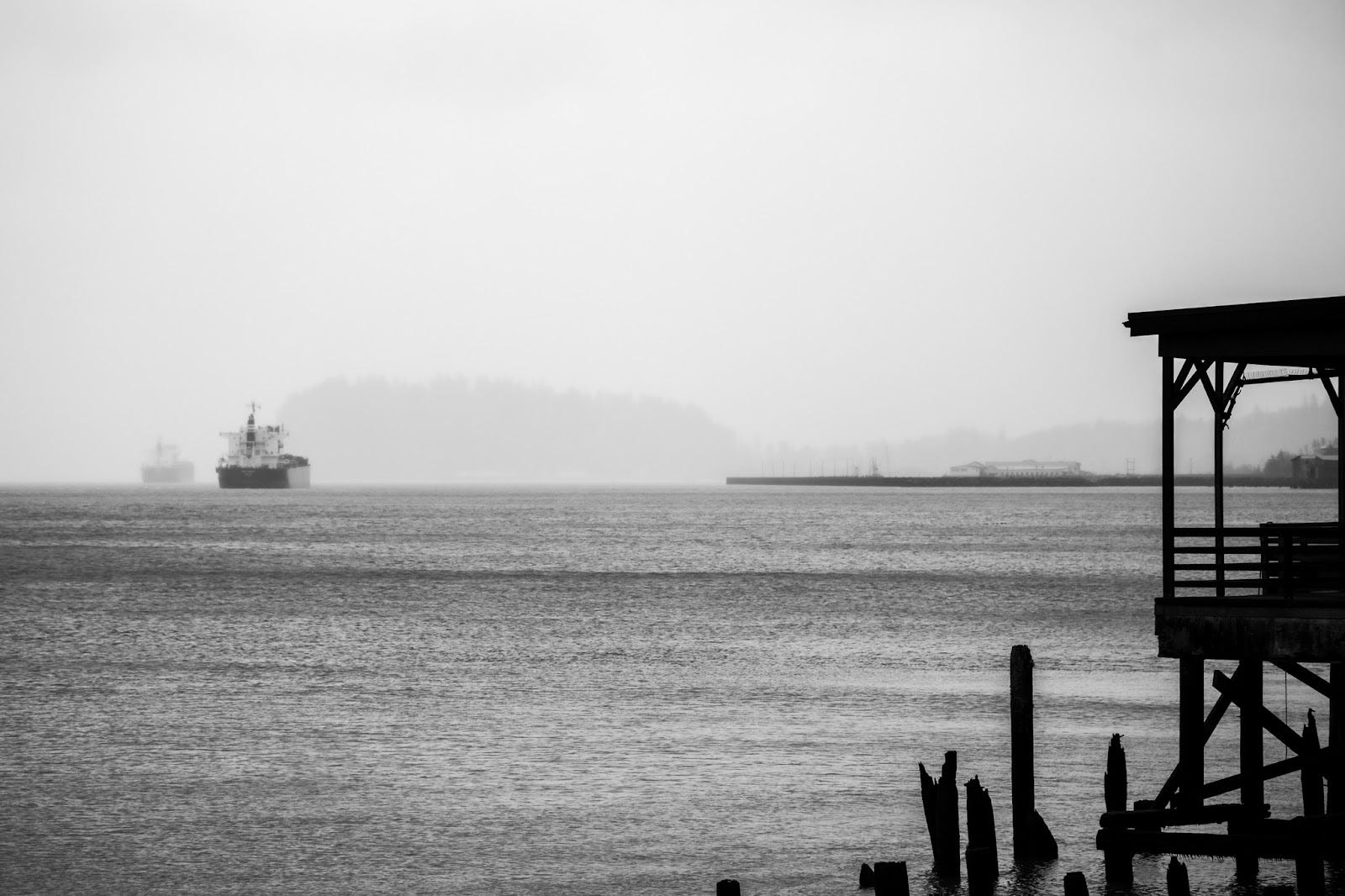
This last week, I drove to Astoria, sat in a coffee shop I love (everyone visit Sleeper Coffee!), and began the process of revising my prior novel. The sense of having a destination, the forest and mountains and grimy little restaurants on the way, the view of the Columbia–these are all things I love. Filling up on that lowered the barriers, made it easier to evaluate and enjoy my own story, filled in ideas where I found gaps.

So I’ve paused that second novel. I’m still interested in it, but for whatever reason it’s not helping me live how I want. I might write another chapter next week! Or I might park it while I begin the first pass on my first novel. It’s a steep hill – drafted at 135k words, my target (among other things) is to bring it down to 90k. Right now, I’m excited to get started.
If that excitement shifts, I hope I’ll have the wherewithal to accept it. And then do something that I love doing, because doing so helps me love writing.